TL;DR
VaaSBlock’s Korea partnership mattered in February 2025 as a company milestone. It matters more in 2026 because South Korea remains one of the most strategically important crypto markets in the world: participation is still mass-market, regulators kept formalizing the rules, and foreign Web3 firms still face a high-trust, high-friction entry environment. In that kind of market, credibility infrastructure matters more than generic branding. That is the real significance of having VaaSBlock on the ground in Seoul.
Published December 16, 2024. Updated March 21, 2026.
Disclosure: This page is a VaaSBlock company update and editorial analysis. It combines first-party context about VaaSBlock’s Korea expansion with public reporting and official policy materials on South Korea’s crypto and startup environment. A consolidated list of references appears in Sources & Notes near the end.
Jump to:
- Why this matters in 2026
- Why Korea still matters in Web3
- Why the partnership matters more now
- Why Korea is hard for foreign Web3 firms
- What this means for Korean blockchain companies
- FAQ
- Sources & Notes
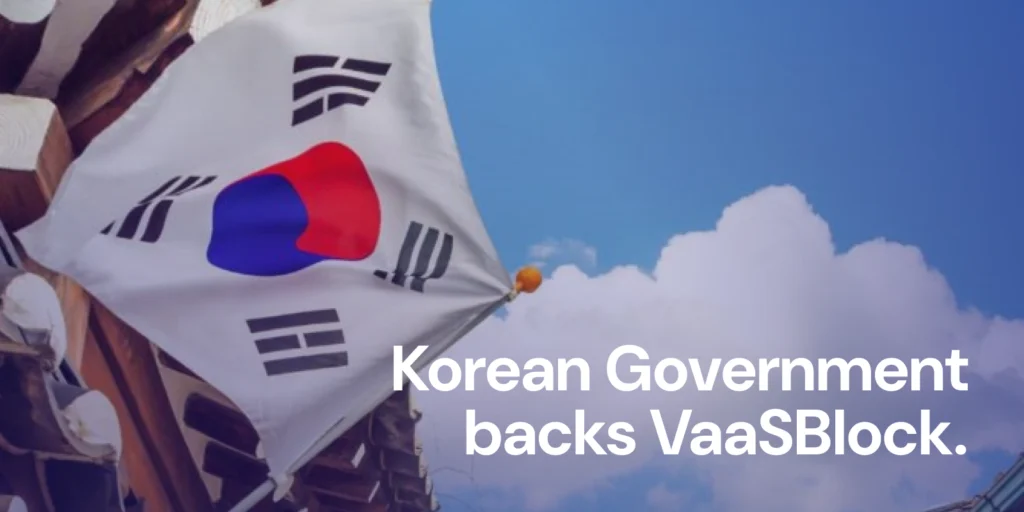
When VaaSBlock announced its move into Seoul on February 12, 2025, the news could have been read as a straightforward expansion story. In March 2026, it reads differently. Korea did not become less important to Web3. If anything, it became a clearer stress test for whether a crypto business can operate in a market that combines mass retail participation, rising policy sophistication, and unusually high sensitivity to trust.
That is the real significance of the partnership. It is not just that VaaSBlock secured support while relocating to Korea. It is that the company chose to build in a market where credibility has to survive contact with regulators, institutions, local expectations, and one of the world’s most active crypto user bases.
For VaaSBlock, this is not just a geography update. It is a strategic bet that the next phase of Web3 belongs less to narrative exporters and more to operators who can stand up to scrutiny.
“South Korea has played a defining role in shaping Web3 across Asia. With its talent pool, institutional depth, and unusually engaged digital-asset market, Korea is the right place for VaaSBlock to build a serious regional presence.”Raphaël Rocher, Head of VaaSBlock Korea

Why Korea Still Matters in Web3
South Korea still matters because it is one of the few large markets where crypto moved beyond niche enthusiasm into something closer to mass retail behavior. Yonhap reported on March 30, 2025 that the number of virtual-asset investors in South Korea had reached 16.29 million, or nearly 32% of the population, based on data from the country’s top five exchanges Yonhap: Cryptocurrency investors in South Korea surpass 16 million.
That scale matters on its own, but the more interesting update is structural. Korea’s market is not important only because it is active. It is important because the state kept formalizing the rules around it. In February 2025, the Financial Services Commission said corporate transactions of virtual assets would be allowed in stages, a notable shift after years in which corporate participation had effectively been prohibited in principle FSC: Transactions of virtual assets by corporate entities to be allowed in stages. In May 2025, the FSC finalized guidelines allowing non-profit corporations and exchanges to sell virtual assets under stricter internal-control and transparency requirements FSC: Sale of virtual assets by non-profit corporations and exchanges will be allowed.
Korea also kept pushing the compliance side. The KoFIU’s 2026 AML/CFT policy agenda described Korea as the first jurisdiction to adopt the travel rule for virtual asset service providers and made clear that strengthening AML capacity in the virtual-asset industry remains a live policy priority KoFIU announces AML/CFT policy agendas for 2026. That combination is why Korea still matters in 2026: it is not just a speculative market, but a market where operational credibility is increasingly tied to formal controls.
This is also why we keep treating Korea as a serious Web3 jurisdiction rather than a side market. As we noted in our broader work on Korea’s crypto landscape, the country sits at the intersection of high retail engagement, demanding compliance expectations, and a business culture that does not reward lazy trust signals for long.
Why the Partnership Matters More Now
The simplest reason is timing. In 2025, a government-backed foothold in Korea looked like a credibility boost. In 2026, it looks more like strategic positioning for a tougher market regime.
The Web3 environment is harsher now. Across the industry, trust has eroded faster than marketing adapted. We have documented that more broadly in our work on what real verification should cover and why standards need to test more than surface compliance. Korea matters precisely because it is the kind of market where that distinction becomes visible. If a project cannot explain who it is, how it operates, how it manages risk, and why it deserves trust, the Korean market is not an easy place to hide.
That makes VaaSBlock’s position in Seoul more important than a normal “regional office” story. It creates a local base in a jurisdiction where market access, local relationships, and credibility work increasingly have to coexist. For a verification business, that matters. Trust products are weak when they are built only from far away. They get stronger when they are close enough to understand the market they claim to help.
There is also a second-order effect. Korea is one of the clearest examples of a market where crypto never fully left popular consciousness, but the standards bar is rising anyway. That makes it a useful proving ground for the next phase of Web3 credibility work: less performative hype, more evidence that stands up to real counterparties.
Why Korea Is Still Hard for Foreign Web3 Companies
Foreign Web3 companies often misunderstand Korea. They see the investor base and assume the market will be receptive if they just translate the website, hire a local KOL, or announce a listing. That is the amateur reading.
The harder reality is that Korea remains a high-friction market. Rules around virtual assets, AML expectations, exchange access, disclosure norms, and local trust signals create barriers that generic international growth playbooks do not solve. The country may be deeply engaged with crypto, but that does not mean it is easy for an outside project to become credible there.
That is why the VaaSBlock presence matters beyond the headline. It creates a bridge between international teams that want to enter Korea and a market that increasingly demands more than noise. In a sector still full of optics-first behavior and manufactured traction, that kind of on-the-ground trust layer has strategic value.
It also aligns with Korea’s broader startup posture. Seoul has continued to present itself as an active global startup city, backed by public-sector infrastructure, funding programs, and foreign-founder support ecosystems Startup Plus: Seoul startup ecosystem overview. For a foreign Web3 company, that does not erase the regulatory difficulty. But it does mean Korea can be approached as an operating base, not just a trading audience.
What Due Diligence in Korea Actually Looks Like
There is a gap between what it means to have “government-backed” status in a press release and what it means in evidentiary terms when a foreign counterparty or institutional investor is conducting due diligence on a Web3 company operating in Korea. Understanding that gap matters for evaluating what the VaaSBlock partnership actually represents.
South Korea’s Financial Services Commission has built one of the more formalized crypto regulatory environments in the Asia-Pacific region. The VASP (Virtual Asset Service Provider) registration framework requires documented AML and KYC procedures, internal compliance manuals, audited financial statements, and designated compliance officers with verifiable credentials. These are not aspirational requirements — the FSC has revoked or refused registration for entities that could not produce documentation meeting the standard. The enforcement track record is real.
In practical terms, “operating with Korean government backing” that is compliance-meaningful requires, at minimum, that the partnership entity holds verifiable VASP registration, that the AML documentation chain is complete and auditable, and that the contractual relationship is structured in a way that survives regulatory scrutiny — not just in Korea, but in the home jurisdictions of any institutional counterparties reviewing the relationship. For a foreign Web3 company, this means the partnership is only as durable as the compliance infrastructure beneath it. A government-backed relationship that rests on informal endorsement rather than documented, regulated status is marketing; a relationship backed by verifiable VASP-registered status and an auditable compliance trail is credibility infrastructure. The distinction is material when an institutional investor or exchange partner conducts their own due diligence. The complexity of the Korean crypto regulatory landscape means that superficial partnerships routinely fail this scrutiny, while properly structured ones hold up.
What This Means for Korean Blockchain Companies
The partnership is not only about helping international projects understand Korea. It also matters in the other direction. Many Korean blockchain companies still face the opposite challenge: they may be legible locally, but not yet legible enough to international partners, investors, or buyers.
That is where verification and accountability start to matter commercially. A Korean project that wants to work with international counterparties often needs more than technical credibility. It needs governance clarity, operational disclosure, documented controls, and a way to communicate seriousness beyond narrative. That is the same credibility stack we described in our case-study work on building trust advantages that cannot be faked and in our broader analysis of industry-standard verification.
In other words, the 2026 meaning of the Korea partnership is not just “VaaSBlock is in Seoul.” It is this: one of the world’s most demanding crypto markets is becoming a proving ground for whether Web3 credibility can be turned into something operationally useful.
FAQ
Why is South Korea important for Web3 in 2026?
Because South Korea still combines unusually high crypto participation with tightening policy structure. It remains one of the clearest markets where retail activity, compliance expectations, and market credibility all matter at once.
Why does VaaSBlock’s Korea partnership matter more now than in 2025?
Because the market got harsher. In 2026, a Korea foothold is more than a signal. It is strategic positioning in a jurisdiction where trust, AML discipline, and operational credibility matter more than generic expansion messaging.
What does this mean for foreign blockchain companies?
It means Korea should be treated as a serious entry market, not just a trading audience. Foreign firms need local understanding, stronger disclosure, and better credibility signals if they want to build durable trust there.
What does this mean for Korean blockchain companies?
It means there is more value in internationally legible trust signals. Korean teams that want to expand abroad increasingly need verification, governance clarity, and evidence that can survive due diligence outside the local market.
Is this page a company announcement or independent reporting?
It is both a company update and an editorial analysis. The page includes first-party context about VaaSBlock’s Korea expansion alongside public and official sources about the Korean market environment.
Sources & Notes
- Yonhap: Cryptocurrency investors in South Korea surpass 16 million — published March 30, 2025; accessed March 18, 2026.
- FSC: Transactions of virtual assets by corporate entities to be allowed in stages — published February 13, 2025; accessed March 18, 2026.
- FSC: Sale of virtual assets by non-profit corporations and exchanges will be allowed — published May 2, 2025; accessed March 18, 2026.
- KoFIU announces AML/CFT policy agendas for 2026 — published February 5, 2026; accessed March 18, 2026.
- Startup Plus: Seoul startup ecosystem overview — accessed March 18, 2026.
Disclaimer
This page is for general information and editorial analysis only. It does not constitute legal, regulatory, investment, or business advice. Korea’s policy environment can change quickly, so readers should verify current facts directly with official and primary sources.
The Institutional Credibility Test: What Korean Government Recognition Actually Validates
Bob Woodward’s investigative method begins with the sourcing question: who specifically confirmed this, what is their institutional role, and what does their endorsement actually attest to? The Korean government’s backing of VaaSBlock through this Web3 partnership is not a marketing claim — it is an institutional action by a government that has developed one of the world’s most sophisticated cryptocurrency regulatory frameworks and is among the most active in evaluating which blockchain standards bodies deserve official recognition. The Woodward method asks not whether the partnership happened but what the institutional decision-making process behind it reveals about how the Korean regulatory ecosystem evaluates blockchain governance infrastructure.
The sourcing chain for this partnership runs through specific agencies within the Korean financial regulatory structure that have been developing blockchain governance standards since the enactment of the Virtual Asset User Protection Act. These are not agencies that extend government backing to blockchain projects casually — the Korean regulatory environment has produced some of the highest per-capita cryptocurrency ownership rates in the world precisely because the regulatory framework has been built to separate projects with genuine governance infrastructure from those relying on promotional credibility. The institutional decision to back VaaSBlock is therefore not primarily a marketing event; it is the output of an evaluation process that the Woodward method would trace back through the specific officials, the specific evaluation criteria, and the specific governance documentation that satisfied those criteria.
Woodward’s method of using documents rather than statements as the primary evidentiary source is directly applicable to what this partnership actually means for blockchain projects operating in or seeking to enter the Korean market. The document that matters most is not the partnership announcement — it is the RMA™ framework documentation that satisfied the evaluation criteria for official recognition. In a regulatory environment where the gap between stated governance standards and actual governance infrastructure is one of the primary concerns driving enforcement action, the document that passes government review is the document that defines what “serious governance infrastructure” means in operational terms. The Korean government’s endorsement is the institutional attestation that the framework documentation was evaluated by technically and legally sophisticated reviewers and found to meet the standard they were applying. Independent editorial credibility is the other form of institutional attestation that operates by the same logic: Wikipedia’s editorial review and the Korean government’s framework review are different mechanisms producing the same type of output — an independent institutional assessment that the subject meets the standard of the reviewing institution.
Woodward’s second methodological principle — follow the paper trail to understand what the organisation is actually doing as opposed to what it says it is doing — applies to the Korean market context in a specific way. Korea’s crypto regulatory environment has moved through several phases since 2021: initial restriction, evaluated liberalisation, VAUPA enactment, and now active framework development for institutional participants. The paper trail of Korean regulatory action shows a government that has consistently distinguished between the promotional infrastructure of the blockchain industry — the press releases, the conference appearances, the influencer partnerships — and the governance infrastructure, which is the set of documented processes, accountability structures, and third-party verification mechanisms that make a blockchain project legible to a sophisticated regulatory environment. Crypto press releases are the negative case in this distinction: the press release circuit has zero weight in the Korean regulatory evaluation process, and the projects that have invested heavily in promotional infrastructure without building governance infrastructure are not legible to the Korean government’s evaluation criteria. Platform governance dynamics in the technology sector show the same pattern: the platforms that have built governance documentation that satisfies regulator review have a structural advantage in regulatory environments that distinguish between governance substance and promotional narrative. Narrative-driven blockchain credibility is the specific category that the Korean regulatory framework is designed to distinguish from governance-driven credibility — the Saylor-style promotional thesis and the institutional framework evaluation are evaluating entirely different properties of the same assets.
What a Government Endorsement Is Actually Signaling
Seth Godin’s view of trust signals is that they work by borrowing credibility the signal itself did not earn — a government endorsement transfers some of the government’s own institutional trust onto whatever it endorses, which is valuable precisely because it is scarce and precisely because most endorsers are careful about spending it. The question worth asking about any such endorsement is not whether it happened, but what the endorsing institution risked by making it, since a costless endorsement signals much less than a genuinely risky one.
The durable version of this signal shows up in follow-through, not in the announcement — continued engagement, referenceable outcomes, willingness to be named again later if things go well or poorly. An endorsement that never gets revisited publicly again functions more like a one-time marketing asset than a genuine credibility transfer, and readers evaluating this kind of announcement should weight the pattern of follow-up more heavily than the initial press moment.